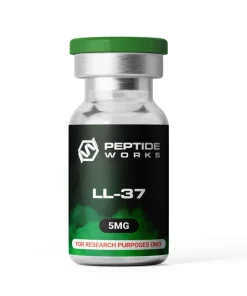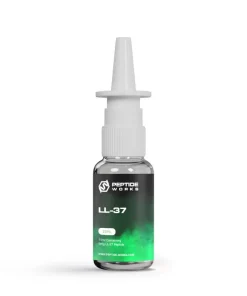

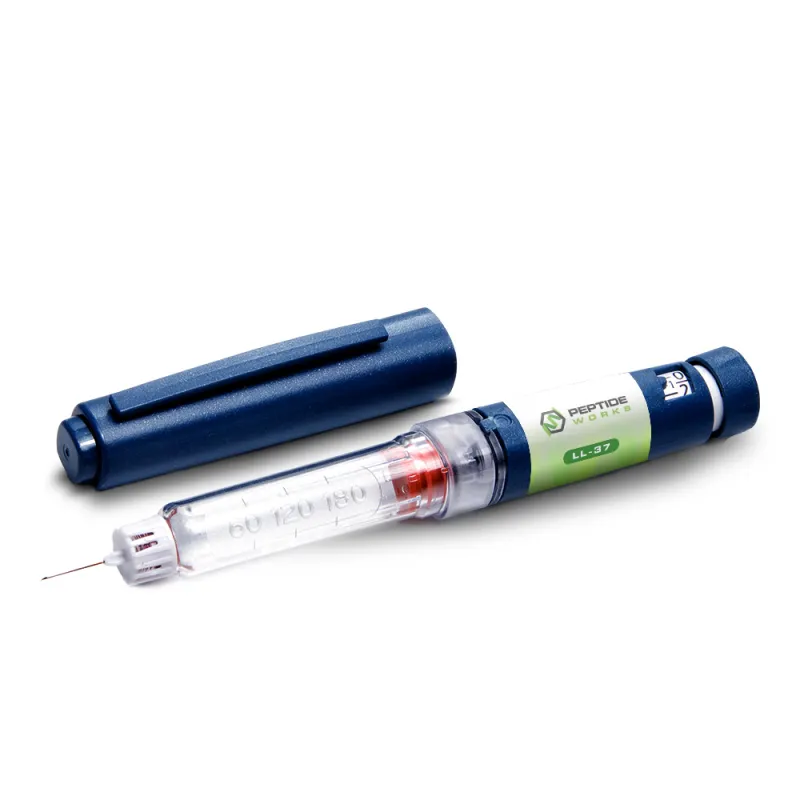
Buy LL-37 Pre-Mixed Peptide in Europe
Where to buy LL-37 Pre-Mixed Peptide in the EU? From our EU warehouse with 48H delivery to UK, Germany, France and across Europe.
Can I purchase LL-37 Pre-Mixed Peptide online? Yes. You can order LL-37 Pre-Mixed Peptide, shop LL-37 research peptide, or get LL-37 pre-mixed solution from EU stock today.
At PeptideShopEurope.com we supply lab-grade LL-37 in a sterile ready-to-use solution, with full COA for research verification.
LL-37 Pre-Mixed Peptide: Overview
LL-37 Pre-Mixed Peptide refers to a prepared peptide formulation containing LL-37, the only naturally occurring human cathelicidin antimicrobial peptide. LL-37 is produced from the CAMP (cathelicidin antimicrobial peptide) gene and plays an important role in the body’s innate immune system, where it contributes to antimicrobial defense, immune signaling, and inflammatory regulation.
LL-37 has been extensively studied in laboratory and preclinical research for its interactions with bacteria, viruses, fungi, immune cells, epithelial tissues, and wound-healing pathways. Researchers continue investigating LL-37 because it combines direct antimicrobial activity with broader immunomodulatory functions.
The term pre-mixed peptide describes the product’s presentation as a prepared formulation. It does not establish purity, concentration, sterility, stability, clinical effectiveness, or regulatory approval.
What Is LL-37 Pre-Mixed Peptide?
LL-37 Pre-Mixed Peptide is a ready-to-use formulation containing the LL-37 peptide.
LL-37 is a 37-amino-acid peptide generated through enzymatic processing of the precursor protein hCAP18. It belongs to the cathelicidin family of antimicrobial peptides, which help protect the body against invading microorganisms as part of the innate immune response.
Unlike conventional antibiotics, LL-37 functions through multiple biological mechanisms, including interactions with microbial membranes and modulation of immune signaling pathways.
LL-37 Pre-Mixed Peptide: How It Works
LL-37 performs several biological functions simultaneously.
A simplified pathway is:
LL-37 → Interaction with microbial membranes and immune cells → Host-defense and inflammatory signaling responses
Research suggests LL-37 can:
- Disrupt microbial cell membranes.
- Recruit immune cells to sites of injury or infection.
- Influence cytokine production.
- Modulate inflammatory signaling pathways.
- Participate in tissue-repair responses.
Its biological effects depend on concentration, tissue environment, and the type of cells involved.
LL-37 Pre-Mixed Peptide and Innate Immunity
LL-37 is considered one of the body’s major host-defense peptides.
It has been studied for activity against numerous microorganisms, including:
- Gram-positive bacteria.
- Gram-negative bacteria.
- Certain viruses.
- Fungi.
- Biofilm-forming microorganisms.
Researchers have also investigated LL-37’s role in preventing microbial colonization on epithelial surfaces, including the skin and respiratory tract.
Because LL-37 is part of innate immunity, it functions differently from antibodies or adaptive immune responses.
LL-37 Pre-Mixed Peptide and Immune Regulation
Beyond antimicrobial activity, LL-37 acts as an immunomodulatory peptide.
Research has explored its influence on:
- Neutrophils.
- Macrophages.
- Dendritic cells.
- T lymphocytes.
- Cytokine signaling.
- Chemokine production.
LL-37 may both promote and suppress inflammatory responses depending on the biological context, making it an important subject of immune-system research.
LL-37 Pre-Mixed Peptide and Wound-Healing Research
LL-37 has attracted significant attention in tissue-repair research.
Experimental studies have investigated LL-37 in relation to:
- Skin wound healing.
- Angiogenesis.
- Epithelial regeneration.
- Collagen-related signaling.
- Cellular migration.
- Tissue remodeling.
Researchers continue studying whether LL-37 contributes to normal tissue repair through regulation of inflammation and cellular communication.
Most findings remain experimental and should not be interpreted as proof of clinical wound-healing effectiveness.
LL-37 Pre-Mixed Peptide and Skin Research
Skin biology is another important area of LL-37 research.
Studies have investigated LL-37’s role in:
- Psoriasis.
- Rosacea.
- Atopic dermatitis.
- Skin barrier function.
- Cutaneous immune signaling.
- Microbial defense of the skin.
LL-37 appears to participate in both protective and inflammatory skin responses, depending on the condition being studied.
Its involvement in inflammatory skin diseases has made LL-37 an important biomarker and research target in dermatology.
LL-37 Pre-Mixed Peptide and Respiratory Research
LL-37 is naturally expressed within respiratory epithelial tissues.
Researchers have studied its role in:
- Airway immune defense.
- Respiratory epithelial biology.
- Viral-response pathways.
- Lung inflammatory signaling.
- Mucosal immunity.
Experimental work has explored LL-37 during respiratory infections because it is part of the body’s first-line immune defense mechanisms.
These findings do not establish LL-37 as an approved treatment for respiratory infections.
Research Applications of LL-37 Pre-Mixed Peptide
Antimicrobial Research
LL-37 is widely studied for interactions with bacterial, viral, and fungal pathogens.
Immunology Research
Researchers investigate LL-37’s influence on innate and adaptive immune signaling.
Wound-Healing Research
Experimental models examine LL-37’s role in epithelial repair and tissue regeneration.
Dermatology Research
LL-37 has become an important research target in inflammatory skin disorders.
Host-Defense Peptide Research
LL-37 serves as a model peptide for understanding endogenous antimicrobial peptides.
Evidence and Limitations
LL-37 has an extensive scientific literature, but much of the evidence remains laboratory or preclinical.
Important limitations include:
- Human clinical evidence remains limited for many proposed uses.
- Biological effects vary depending on concentration and tissue environment.
- Long-term safety of experimental peptide formulations has not been fully established.
- Commercial formulations may differ from research materials.
- Antimicrobial laboratory activity does not automatically translate into clinical effectiveness.
Claims that LL-37 is a proven treatment for infections, autoimmune disease, wound healing, chronic inflammation, or skin disorders exceed the available clinical evidence.
Product Quality and Documentation
For a prepared peptide formulation, product-specific documentation is important.
Useful documentation may include:
- LL-37 peptide identity.
- Amino acid sequence.
- Concentration.
- Purity testing.
- Batch or lot number.
- Manufacturing information.
- Formulation ingredients.
- Stability testing.
- Storage recommendations.
- Expiration or retest date.
- Certificate of analysis, where available.
A certificate of analysis provides analytical information for a specific batch but does not establish regulatory approval or therapeutic effectiveness.
Safety and Important Considerations
LL-37 is a biologically active peptide involved in immune regulation.
Important considerations include:
- Limited long-term human safety data.
- Potential concentration-dependent inflammatory effects.
- Route-specific absorption may differ between formulations.
- Product quality and purity may vary.
- Experimental biological activity should not be interpreted as established clinical benefit.
A product marketed as LL-37 Pre-Mixed Peptide should therefore be distinguished from approved pharmaceutical medicines.
Storage and Handling
Storage recommendations depend on the formulation and manufacturer’s instructions.
General considerations include:
- Store according to labeled temperature requirements.
- Keep the container tightly sealed.
- Protect from excessive heat, moisture, and direct light.
- Observe the expiration or retest date.
- Do not use damaged or compromised packaging.
- Follow product-specific stability guidance.
Frequently Asked Questions About LL-37 Pre-Mixed Peptide
What is LL-37 Pre-Mixed Peptide?
It is a prepared peptide formulation containing LL-37, a naturally occurring human antimicrobial peptide involved in innate immune defense.
What does LL-37 do?
LL-37 participates in antimicrobial defense, immune signaling, inflammatory regulation, epithelial biology, and tissue-repair research.
Is LL-37 an antibiotic?
No. LL-37 is an endogenous antimicrobial peptide produced by the human immune system and functions differently from conventional antibiotics.
Why is LL-37 important in immune research?
Researchers study LL-37 because it combines antimicrobial activity with immune-modulating effects across multiple tissues.
Has LL-37 been studied in humans?
Yes. LL-37 has been investigated in human tissues and clinical research, although many proposed therapeutic applications remain experimental.
Is LL-37 Pre-Mixed Peptide an approved medicine?
A product marketed as LL-37 Pre-Mixed Peptide should not automatically be considered an approved pharmaceutical medicine. Regulatory status depends on the specific formulation, manufacturer, intended use, and jurisdiction.
Scientific References and Informative Sources
- PubMed — The Human Cathelicidin LL-37: Structure, Functions, and Clinical Relevance
- PubMed — LL-37: An Antimicrobial Peptide with Therapeutic Potential
- PubMed — Cathelicidins and Innate Host Defense
- NCBI Bookshelf — Antimicrobial Peptides and Innate Immunity
- PubMed — LL-37 in Skin Immunity and Inflammatory Disease
Summary
LL-37 Pre-Mixed Peptide is a prepared formulation containing LL-37, the principal human cathelicidin antimicrobial peptide involved in innate immune defense. Scientific research has investigated LL-37 for its roles in antimicrobial activity, immune regulation, inflammatory signaling, skin biology, respiratory immunity, and wound-healing research.
Although LL-37 demonstrates important biological activity in laboratory and preclinical studies, many proposed therapeutic applications remain investigational. A commercial LL-37 Pre-Mixed Peptide should therefore be described as an experimental research peptide, with product claims distinguished from findings established through clinical research.
ALL CONTENT AND PRODUCT INFORMATION AVAILABLE ON THIS WEBSITE IS FOR EDUCATIONAL PURPOSES ONLY.
DISCLAIMER: Products are supplied for research purposes only and are not intended to diagnose, treat, cure, or prevent any disease.