
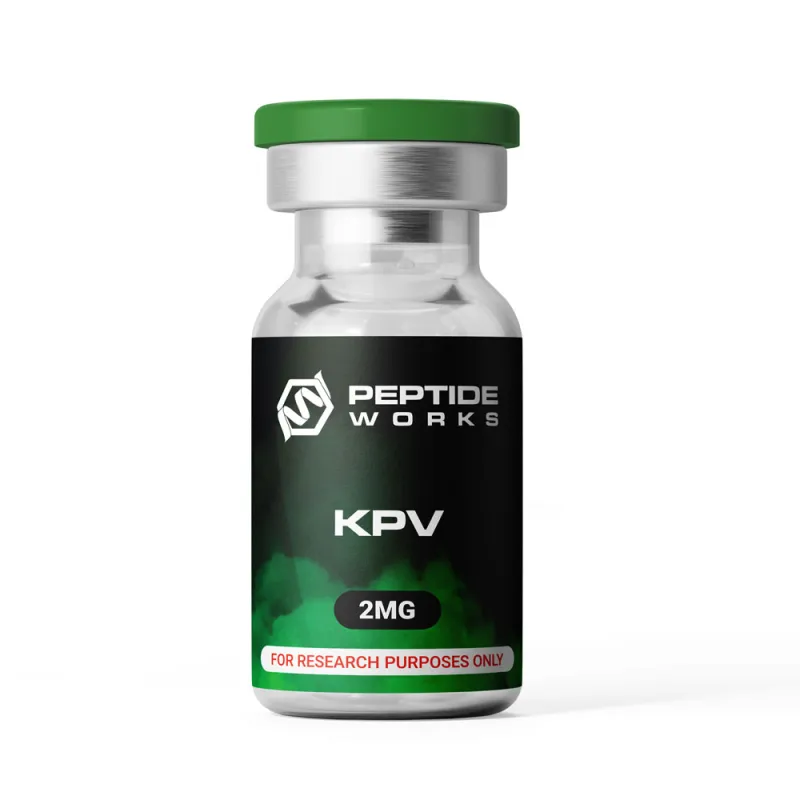
Buy KPV Peptide Vial in Europe Online
shopping for anti-inflammatory peptides? Get KPV Peptide Vial in Europe ready for lab work.
At Peptide Shop Europe we supply lab-grade KPV in a high-purity lyophilized vial. Every vial ships with full COA and lab verification.
Where to buy KPV Peptide Vial in the EU? From our EU warehouse with 48H delivery to UK, Germany, France and across Europe.
Can I purchase KPV Peptide Vial online? Yes. You can order KPV Peptide Vial, shop KPV research peptide, or get KPV tripeptide vial from EU stock today.
Researchers across Europe trust Peptideshopeurope.com to purchase pharmaceutical-grade KPV for inflammation, gut, and immune research. Verified purity, discreet shipping, and fast dispatch so you can stock your lab with KPV Peptide Vial in Europe.
KPV Peptide Vial: Overview
KPV Peptide Vial refers to a vial-form peptide preparation containing KPV (Lys-Pro-Val), a naturally derived tripeptide that corresponds to the C-terminal sequence of alpha-melanocyte-stimulating hormone (α-MSH). KPV has become an important subject of scientific research because it has demonstrated anti-inflammatory and immunomodulatory activity in laboratory and animal studies without producing the pigmentation effects associated with the full α-MSH peptide.
KPV is being investigated in areas including inflammatory signaling, gastrointestinal biology, skin research, epithelial barrier function, and immune regulation. Most of the available evidence comes from preclinical research, and KPV remains an investigational peptide rather than an established therapeutic medicine.
The term peptide vial refers only to the product’s presentation and does not indicate regulatory approval, purity, sterility, stability, or clinical effectiveness.
What Is KPV Peptide Vial?
KPV Peptide Vial contains the tripeptide sequence:
- K — Lysine
- P — Proline
- V — Valine
KPV represents amino acids 11–13 of α-MSH and is considered the smallest peptide fragment that retains many of α-MSH’s anti-inflammatory properties in experimental models. Researchers have studied KPV separately because it appears to influence inflammatory pathways while lacking α-MSH’s melanogenic activity.
Unlike larger melanocortin peptides, KPV is primarily investigated for immune and inflammatory signaling rather than pigmentation.
KPV Peptide Vial: How It Works
The precise biological mechanism of KPV continues to be studied, but current research suggests it acts through multiple inflammatory pathways.
Experimental findings indicate KPV may:
- Modulate NF-κB signaling.
- Reduce production of inflammatory cytokines.
- Influence immune-cell activity.
- Affect epithelial inflammatory responses.
A simplified research pathway is:
KPV → Modulation of inflammatory signaling → Reduced inflammatory mediator activity
Several studies suggest these effects may occur independently of the classical melanocortin-1 receptor (MC1R), distinguishing KPV from the parent α-MSH peptide.
KPV Peptide Vial and Inflammatory Research
Inflammatory biology is the primary field of KPV research.
Scientists have investigated KPV in laboratory models involving:
- TNF-α signaling
- IL-1β production
- IL-6 signaling
- NF-κB activation
- Oxidative stress pathways
Research suggests KPV may reduce inflammatory signaling in epithelial and immune cells under experimental conditions.
These findings provide a scientific rationale for continued research but do not establish KPV as an approved anti-inflammatory medicine.
KPV Peptide Vial and Gastrointestinal Research
KPV has been widely studied in gastrointestinal research because intestinal epithelial cells express peptide transport systems capable of transporting small peptides.
Experimental studies have examined KPV in models of intestinal inflammation and reported reductions in inflammatory markers, improved epithelial barrier integrity, and decreased intestinal injury in animal models of colitis.
Researchers have therefore investigated KPV in relation to:
- Intestinal epithelial biology.
- Barrier function.
- Experimental inflammatory bowel disease models.
- Mucosal immune signaling.
These studies remain preclinical and should not be interpreted as evidence that KPV is an approved treatment for Crohn’s disease or ulcerative colitis.
KPV Peptide Vial and Skin Biology
Because KPV originates from α-MSH, researchers have also explored its role in skin biology.
Experimental studies have investigated KPV in models involving:
- Dermatitis.
- Keratinocyte inflammation.
- Wound-healing biology.
- Cutaneous immune responses.
Research suggests KPV may influence inflammatory pathways in skin cells without inducing pigmentation responses typically associated with α-MSH.
KPV Peptide Vial and Immune Regulation
KPV has attracted attention as a potential immunomodulatory peptide because inflammatory regulation does not necessarily require broad immunosuppression.
Laboratory research has examined KPV’s effects on:
- Cytokine production.
- Neutrophil migration.
- Macrophage inflammatory activity.
- Cellular immune signaling.
Some studies also describe antimicrobial activity associated with α-MSH-derived peptides, including KPV, against selected microorganisms under laboratory conditions.
These observations remain part of experimental host-defense research.
Research Applications of KPV Peptide Vial
Inflammatory Signaling Research
KPV serves as a model peptide for investigating inflammatory pathways regulated by NF-κB and cytokines.
Gastrointestinal Research
Experimental models have explored KPV’s influence on intestinal epithelial cells and inflammatory bowel biology.
Skin and Dermatology Research
Researchers continue investigating KPV in laboratory models of inflammatory skin conditions and epithelial repair.
Barrier Function Research
KPV has been studied for its effects on epithelial integrity and mucosal biology.
Host-Defense Research
Its relationship with α-MSH has prompted research into antimicrobial and immune-modulating properties.
Evidence and Limitations
Current evidence supporting KPV is primarily derived from laboratory experiments and animal studies.
Important limitations include:
- Human clinical evidence remains limited.
- Long-term human safety has not been established.
- Experimental dosing differs between studies.
- Product formulation can influence stability and exposure.
- Animal findings cannot automatically be translated into human therapeutic outcomes.
- Biological activity does not establish clinical effectiveness.
Therefore, claims that KPV is clinically proven for gastrointestinal disease, autoimmune disease, skin disorders, wound healing, or chronic inflammation are not supported by sufficient human clinical evidence.
Product Quality and Documentation
For a peptide supplied in a vial, product-specific documentation is useful for evaluating quality.
Typical documentation may include:
- KPV peptide identity.
- Amino acid sequence.
- Concentration.
- Purity analysis.
- Batch or lot number.
- Manufacturing information.
- Formulation ingredients.
- Stability testing.
- Storage recommendations.
- Expiration or retest date.
- Certificate of analysis, where available.
A certificate of analysis provides analytical information for a specific batch but does not establish regulatory approval or therapeutic effectiveness.
Safety and Important Considerations
KPV remains an investigational peptide with limited human clinical evidence.
Important considerations include:
- Limited long-term safety data.
- Pharmacokinetics remain under investigation.
- Different routes of administration may produce different biological exposure.
- Product purity and manufacturing quality may vary.
- Experimental biological effects should not be interpreted as proven clinical outcomes.
A product marketed as KPV Peptide Vial should therefore be distinguished from approved pharmaceutical medicines.
Storage and Handling
Storage instructions depend on the specific formulation and manufacturer’s recommendations.
General considerations include:
- Store according to labeled temperature requirements.
- Keep the vial tightly sealed.
- Protect from excessive heat, moisture, and direct light.
- Observe the expiration or retest date.
- Do not use damaged or contaminated packaging.
- Follow product-specific stability guidance.
Frequently Asked Questions About KPV Peptide Vial
What is KPV Peptide Vial?
It is a vial-form preparation containing KPV, a three-amino-acid peptide derived from the C-terminal sequence of α-MSH.
What does KPV stand for?
KPV stands for Lysine–Proline–Valine, the three amino acids that make up the peptide.
Is KPV the same as α-MSH?
No. KPV is a tripeptide fragment of α-MSH and is structurally different from the complete α-MSH hormone.
What is KPV being researched for?
Research focuses on inflammatory signaling, intestinal epithelial biology, immune modulation, skin biology, epithelial barrier function, and host-defense pathways.
Has KPV been studied in humans?
Human clinical evidence remains limited. Most published studies involve laboratory research and animal models.
Is KPV Peptide Vial an approved medicine?
A product marketed as KPV Peptide Vial should not automatically be considered an approved medicine. Regulatory status depends on the formulation, manufacturer, intended use, and jurisdiction.
Scientific References and Informative Sources
(Maximum 5 clickable links — copy/paste friendly for WordPress and other CMS platforms.)
- Alpha-MSH Related Peptides: A New Class of Anti-Inflammatory and Antimicrobial Peptides
- PepT1-Mediated Tripeptide KPV Uptake Reduces Intestinal Inflammation
- Alpha-Melanocyte-Stimulating Hormone and Related Tripeptides: Biochemistry, Anti-Inflammatory and Protective Effects
Summary
KPV Peptide Vial is a vial-form preparation containing KPV (Lys-Pro-Val), a tripeptide derived from the C-terminal sequence of α-MSH. Scientific research has primarily investigated KPV for its potential role in inflammatory signaling, gastrointestinal biology, epithelial barrier function, skin biology, and immune regulation.
Although laboratory and animal studies have demonstrated promising biological activity, KPV remains an experimental research peptide, and current evidence is not sufficient to establish it as an approved treatment for inflammatory, gastrointestinal, dermatological, or immune-related conditions.
ALL CONTENT AND PRODUCT INFORMATION AVAILABLE ON THIS WEBSITE IS FOR EDUCATIONAL PURPOSES ONLY.
DISCLAIMER: Products are supplied for research purposes only and are not intended to diagnose, treat, cure, or prevent any disease.