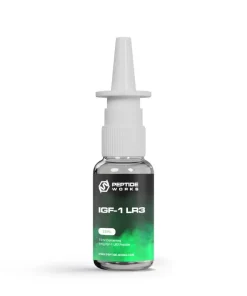

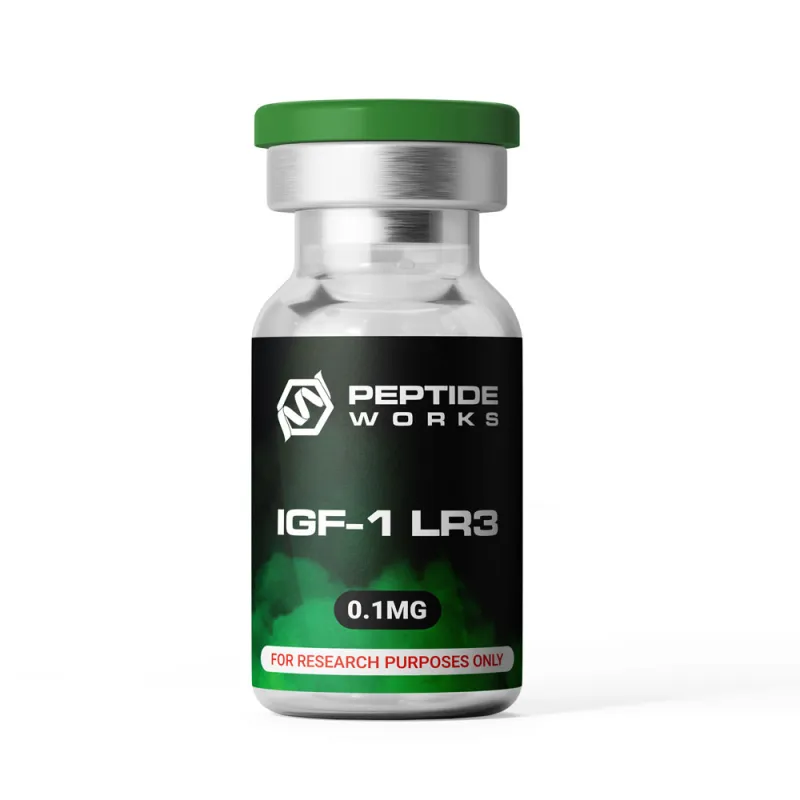
Buy IGF-1 LR3 Peptide Vial In Europe
Running growth factor and cellular research? Get IGF-1 LR3 Peptide Vial in Europe from a trusted EU lab supplier.
At Peptide Shop Europe we supply high-purity lyophilized IGF-1 LR3 in sealed vials. Every batch ships with full COA documentation.
Where to buy IGF-1 LR3 Peptide Vial in the EU? From our EU warehouse with 48H delivery to UK, Germany, France and across Europe.
Can I purchase IGF-1 LR3 Peptide Vial online? Yes. You can order IGF-1 LR3 Peptide Vial, shop IGF-1 LR3 research peptide, or get IGF-1 LR3 vial from EU stock today.
Researchers across Europe trust Peptideshopeurope to purchase pharmaceutical-grade IGF-1 LR3 for muscle growth and cell repair studies. Verified purity, discreet shipping, and fast dispatch so you can stock your lab with IGF-1 LR3 Peptide Vial in Europe.
IGF-1 LR3 Peptide Vial: Overview
IGF-1 LR3 Peptide Vial refers to a vial-form preparation associated with Long R3 Insulin-like Growth Factor-1 (IGF-1 LR3), a modified analogue of naturally occurring insulin-like growth factor-1.
IGF-1 LR3 contains structural modifications intended to alter its interaction with IGF-binding proteins while retaining activity at the IGF-1 receptor. The compound has primarily been investigated as an experimental research analogue rather than as an established human therapeutic.
The term vial describes the physical presentation of a preparation and does not by itself establish its concentration, purity, sterility, stability, clinical efficacy, or regulatory status.
What Is IGF-1 LR3 Peptide Vial?
IGF-1 LR3 Peptide Vial describes a vial containing a preparation associated with Long R3 IGF-1.
Native IGF-1 is an important peptide growth factor involved in:
- Cellular growth
- Cell survival
- Differentiation
- Protein metabolism
- Tissue development
- Growth hormone signaling
IGF-1 LR3 is a modified form designed for experimental investigation of IGF-1-related biological pathways.
It should be distinguished from mecasermin, which is recombinant native human IGF-1 and has an established pharmaceutical indication for specific pediatric growth disorders.
IGF-1 LR3 Peptide Vial: Molecular Characteristics
Long R3 IGF-1 is commonly described as a modified IGF-1 analogue containing an N-terminal extension and an arginine substitution at position 3.
These modifications reduce its affinity for several IGF-binding proteins compared with native IGF-1. This characteristic has made the molecule useful in experimental investigations involving IGF-1 receptor signaling and growth-factor biology.
The structural difference is important because IGF-1 LR3 is not simply another name for native IGF-1.
IGF-1 LR3 Peptide Vial: How It Works
IGF-1 LR3 acts primarily through the IGF-1 receptor (IGF-1R).
A simplified signaling pathway is:
IGF-1 LR3 → IGF-1R → intracellular signaling → cellular growth, metabolism and survival pathways
Activation of IGF-1R can influence multiple intracellular pathways involved in cell growth and survival.
IGF-1 signaling is closely connected to the growth hormone/IGF-1 axis, although IGF-1 also has biological effects independent of growth hormone.
IGF-1 LR3 and the GH/IGF-1 Axis
The relationship between growth hormone and IGF-1 is central to understanding this peptide.
A simplified endocrine pathway is:
Growth hormone → GH receptor → IGF-1 production → IGF-1 receptor signaling
This system contributes to normal growth and has continuing roles in metabolism and tissue physiology after childhood.
IGF-1 LR3 acts further downstream by functioning as an IGF-1 analogue. This distinguishes it from compounds such as CJC-1295 and ipamorelin, which are investigated for their effects on growth hormone secretion.
IGF-1 LR3 Peptide Vial: Research Applications
IGF-1 Receptor Research
Long R3 IGF-1 can be used experimentally to investigate IGF-1 receptor activation and downstream signaling pathways.
Cellular Growth Research
IGF-1 signaling is involved in cellular proliferation, differentiation, and survival, making modified IGF-1 analogues relevant to laboratory research.
Protein Metabolism Research
Experimental studies have investigated Long R3 IGF-1 in relation to protein metabolism and tissue responses.
Neurobiological Research
Researchers have also investigated intranasal administration of Long R3 IGF-1 in animal models of neurological disease. A mouse study examined long-term intranasal administration in an Alzheimer’s disease model and reported changes in amyloid-related measures but did not demonstrate preservation of cognitive function.
IGF-1 LR3 Peptide Vial and Experimental Research
Much of the available evidence concerning Long R3 IGF-1 comes from laboratory and animal studies.
Experimental research has investigated areas including:
- Growth-factor signaling
- Protein metabolism
- Tissue development
- Cellular survival
- Organ growth
- Neurological pathways
Animal findings are useful for understanding biological mechanisms, but they cannot automatically be translated into demonstrated human therapeutic benefits.
Evidence and Limitations
The evidence surrounding IGF-1 LR3 should be distinguished from the much larger clinical literature on native IGF-1.
Important limitations include:
- Human clinical evidence for IGF-1 LR3 is limited.
- Long-term human safety has not been established.
- Research formulations may differ from commercially marketed preparations.
- Bioavailability depends on formulation and administration route.
- Animal research does not establish human efficacy.
- Product-specific purity and concentration require independent verification.
Consequently, claims that IGF-1 LR3 is a proven treatment for muscle growth, fat loss, anti-aging, recovery, or longevity are not supported by adequate clinical evidence.
Regulatory Status
IGF-1 LR3 should not be confused with approved recombinant IGF-1 medicines.
Mecasermin is recombinant human IGF-1 and has an established medical indication for certain children with severe primary IGF-1 deficiency. IGF-1 LR3 is a structurally modified analogue and does not have the same regulatory status.
The presence of a peptide in scientific or chemical databases should likewise not be interpreted as evidence of pharmaceutical approval.
Product Quality and Documentation
For a vial-form peptide preparation, product documentation can be useful for evaluating its stated characteristics.
Relevant information may include:
- IGF-1 LR3 identity
- Peptide concentration
- Purity analysis
- Batch or lot number
- Manufacturing information
- Formulation components
- Stability data
- Storage requirements
- Expiration or retest date
- Certificate of analysis, where available
A certificate of analysis can provide batch-specific analytical information but does not independently establish clinical effectiveness or regulatory approval.
Safety and Important Considerations
IGF-1 receptor signaling has broad biological effects involving growth, metabolism, and cell survival.
Because of this, manipulating IGF-1 signaling is biologically significant. The safety of an experimental IGF-1 LR3 Peptide Vial cannot be inferred solely from the established physiological functions of native IGF-1.
Particular uncertainties concern:
- Long-term exposure
- Systemic effects
- Glucose metabolism
- Sustained IGF-1 receptor activation
- Product impurities
- Formulation quality
- Individual response
An experimental IGF-1 analogue should therefore not be presented as an established medical treatment.
Storage and Handling
Storage requirements depend on the individual preparation and manufacturer’s documentation.
General considerations include:
- Follow product-specific storage instructions.
- Keep the vial appropriately closed.
- Protect the preparation from unsuitable temperature, moisture, and light.
- Observe the stated expiration or retest date.
- Do not use visibly compromised packaging.
- Follow documented stability requirements.
Storage conditions for one IGF-1 LR3 product should not automatically be applied to another preparation.
Frequently Asked Questions About IGF-1 LR3 Peptide Vial
What is IGF-1 LR3 Peptide Vial?
It is a vial-form preparation associated with Long R3 IGF-1, a modified analogue of insulin-like growth factor-1 used primarily in experimental research.
What does LR3 mean?
“LR3” refers to Long R3, describing structural modifications to the IGF-1 molecule that alter its interaction with IGF-binding proteins.
Is IGF-1 LR3 the same as IGF-1?
No. IGF-1 LR3 is a modified analogue of native IGF-1 with different molecular characteristics.
Is IGF-1 LR3 the same as HGH?
No. HGH is human growth hormone, whereas IGF-1 LR3 is an analogue of insulin-like growth factor-1. They operate at different points in the GH/IGF-1 signaling system.
Has IGF-1 LR3 been studied scientifically?
Yes. Long R3 IGF-1 has been investigated in laboratory and animal research involving growth-factor signaling, metabolism, tissue biology, and neurological models.
Is IGF-1 LR3 Peptide Vial an approved medicine?
The specific product described as an IGF-1 LR3 Peptide Vial should not automatically be considered an approved pharmaceutical product. Its regulatory status depends on the specific product, manufacturer, formulation, and jurisdiction.
Scientific References and Informative Sources
- FDA Substance Registration — Long-(Arg3) Insulin-Like Growth Factor-I
- PubMed — Long R3 IGF-1 Research
- PubMed — Intranasal Long R3 IGF-1 Research
- FDA — Unapproved Drugs
Summary
IGF-1 LR3 Peptide Vial refers to a vial-form preparation associated with Long R3 IGF-1, a structurally modified analogue of insulin-like growth factor-1.
The compound is relevant to experimental research involving IGF-1 receptor signaling, cellular growth, metabolism, and tissue biology. Research has also investigated specialized delivery approaches and neurological applications in animal models.
However, the evidence remains predominantly experimental, and IGF-1 LR3 should not be presented as an established human therapeutic. The properties of a particular vial—including identity, concentration, purity, stability, manufacturing quality, and regulatory status—must be evaluated independently.
ALL CONTENT AND PRODUCT INFORMATION AVAILABLE ON THIS WEBSITE IS FOR EDUCATIONAL PURPOSES ONLY.
DISCLAIMER: Products are supplied for research purposes only and are not intended to diagnose, treat, cure, or prevent any disease.