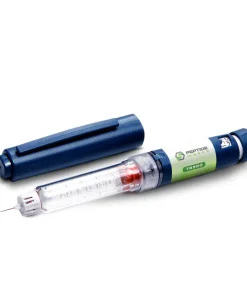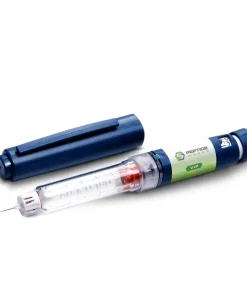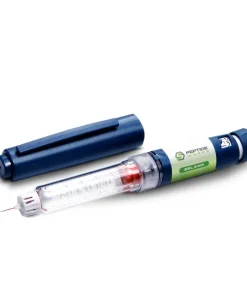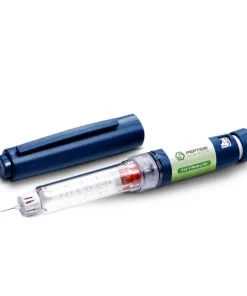

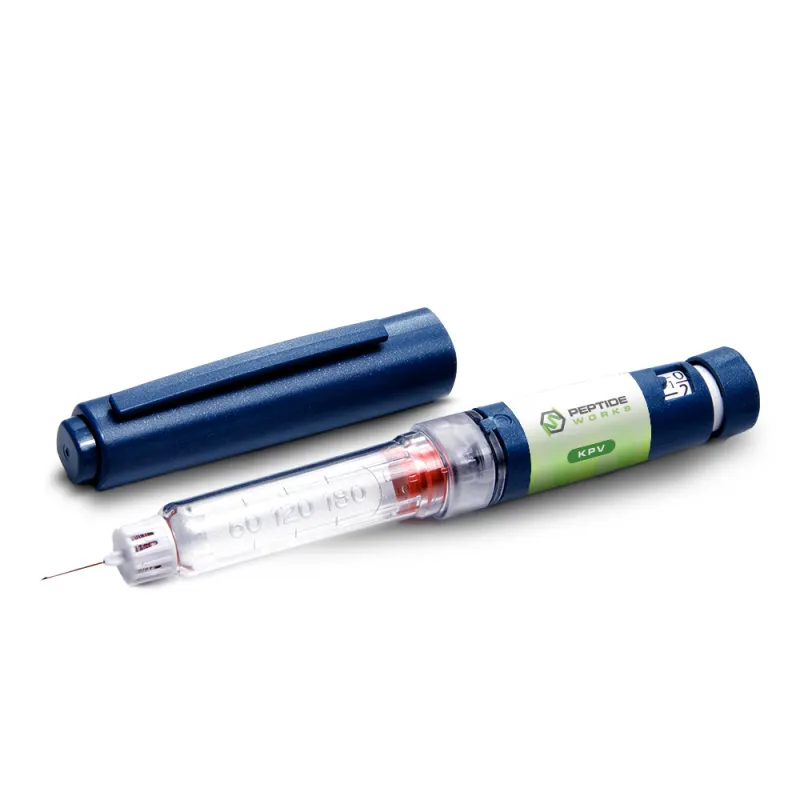
Buy KPV Pre-Mixed Peptide In Europe
Get KPV Pre-Mixed Peptide in Europe ready to use.
At Peptide Shop Europe we supply lab-grade KPV in a sterile pre-mixed solution. No reconstitution needed, every vial ships with full COA.
Where to buy KPV Pre-Mixed Peptide in the EU? From our EU warehouse with 48H delivery to UK, Germany, France and across Europe.
Can I purchase KPV Pre-Mixed Peptide online? Yes. You can order KPV Pre-Mixed Peptide, shop KPV research peptide, or get KPV pre-mixed solution from EU stock today.
Researchers across Europe trust Peptideshopeurope to purchase high-purity KPV for inflammation and gut health studies. Verified purity, discreet shipping, and fast dispatch so you can stock your lab with KPV Pre-Mixed Peptide in Europe.
KPV Pre-Mixed Peptide: Overview
KPV Pre-Mixed Peptide refers to a prepared formulation containing KPV, a short peptide consisting of the three amino acids lysine (K), proline (P), and valine (V). KPV corresponds to the C-terminal sequence of α-melanocyte-stimulating hormone (α-MSH) and has been investigated primarily in laboratory research involving inflammatory signaling, intestinal biology, and epithelial responses.
The term pre-mixed describes the preparation format. It does not by itself establish a product’s concentration, purity, sterility, stability, clinical effectiveness, or regulatory approval.
What Is KPV Pre-Mixed Peptide?
KPV is a tripeptide derived from α-MSH. Unlike the much larger α-MSH molecule, KPV contains only three amino acids:
Lysine – Proline – Valine
Research has investigated KPV because some biological activities associated with α-MSH appear to be retained by its C-terminal sequence.
Experimental studies have particularly focused on interactions between KPV and inflammatory pathways in epithelial tissues.
KPV Pre-Mixed Peptide: How It Works
The precise mechanism of KPV is still being investigated.
Research suggests that KPV can influence inflammatory signaling and may interact with pathways involving NF-κB, a transcription factor involved in regulating inflammatory gene expression.
A simplified research model is:
KPV → modulation of inflammatory signaling → changes in inflammatory mediator expression
However, the molecular mechanism is not completely established, and experimental findings should not be interpreted as demonstrating a proven therapeutic mechanism in humans.
KPV and α-MSH
KPV is structurally related to α-MSH, a melanocortin peptide involved in pigmentation, immune regulation, and other physiological processes.
Research has suggested that the anti-inflammatory properties of α-MSH may not depend exclusively on activation of classical melanocortin receptors. KPV has therefore attracted interest as a smaller peptide for investigating some of these effects.
This distinction is important because KPV is not simply another name for α-MSH.
KPV Pre-Mixed Peptide: Research Applications
Inflammatory Research
KPV has been investigated for its potential influence on inflammatory signaling, particularly in experimental cellular and animal models.
Intestinal Research
One major research area concerns the intestinal epithelium. Experimental studies have examined whether KPV can influence inflammatory responses within intestinal cells.
Barrier Function Research
The intestinal epithelial barrier is essential for separating the contents of the gastrointestinal tract from underlying tissues. Researchers have investigated KPV in relation to inflammatory processes that can affect epithelial integrity.
Microbiological Research
Some experimental work has explored interactions between KPV, intestinal epithelial cells, and microbial components.
KPV Pre-Mixed Peptide and Intestinal Research
KPV has attracted particular scientific interest in gastrointestinal research.
Laboratory studies have investigated its effects on intestinal epithelial cells exposed to inflammatory stimuli. Some experimental findings suggest that KPV can reduce inflammatory signaling and influence epithelial responses.
These observations provide a rationale for further research but do not establish KPV as an approved treatment for inflammatory bowel disease, ulcerative colitis, Crohn’s disease, or other gastrointestinal disorders.
Animal and cell-culture results require confirmation through appropriately designed human clinical trials.
KPV and Inflammatory Signaling
Inflammation involves a complex network of signaling molecules and transcription factors.
One pathway frequently investigated in KPV research is NF-κB signaling. NF-κB regulates the expression of numerous genes involved in inflammatory responses.
Experimental studies have reported that KPV can influence inflammatory signaling in cellular models.
However, the precise receptor-level mechanism responsible for all of KPV’s reported effects remains an area of investigation.
Evidence and Limitations
The scientific literature surrounding KPV is primarily preclinical.
Current limitations include:
- Much of the evidence comes from cell and animal experiments.
- Human clinical evidence is limited.
- Optimal human exposure has not been established.
- Long-term safety data are insufficient.
- Different formulations may have substantially different pharmacokinetic properties.
- Findings from one route of administration cannot automatically be applied to another.
Therefore, claims that KPV is clinically proven to treat inflammation, gastrointestinal disease, skin disorders, or other medical conditions would go beyond the available evidence.
KPV Pre-Mixed Peptide and Skin Research
Because KPV is derived from the α-MSH sequence, researchers have also investigated its potential relevance to skin and inflammatory biology.
Experimental research has examined melanocortin-related peptides in relation to:
- Skin inflammation
- Cellular signaling
- Pigmentation pathways
- Barrier function
- Immune responses
However, laboratory findings involving KPV or related melanocortin peptides should not be interpreted as evidence that a particular commercial KPV preparation is an established dermatological treatment.
Product Quality and Documentation
For a KPV Pre-Mixed Peptide preparation, product-specific documentation can help establish what is actually contained in the formulation.
Relevant information may include:
- KPV identity
- Peptide sequence
- Concentration
- Purity testing
- Batch or lot number
- Manufacturing information
- Formulation ingredients
- Stability data
- Storage requirements
- Expiration or retest date
- Certificate of analysis, where available
A certificate of analysis can provide batch-specific analytical information but does not independently establish clinical efficacy or regulatory approval.
Safety and Important Considerations
KPV remains an experimental peptide, and its safety profile in humans has not been established to the same degree as approved medicines.
Important uncertainties include:
- Long-term systemic exposure
- Pharmacokinetics
- Route-specific absorption
- Dose-response relationships
- Potential interactions with other biologically active compounds
- Product purity and manufacturing quality
The fact that KPV is a naturally derived peptide sequence does not automatically mean that every KPV preparation is safe for human use.
Regulatory Status
A product marketed as KPV Pre-Mixed Peptide should be distinguished from an approved pharmaceutical product.
The existence of laboratory research demonstrating biological activity does not establish regulatory approval. Approval status also depends on the specific formulation, intended use, manufacturer, and jurisdiction.
For accurate product information, it is therefore important to distinguish between KPV as an experimental research peptide and any particular commercial preparation carrying that name.
Storage and Handling
Storage requirements depend on the specific formulation and manufacturer.
General considerations include:
- Follow the product-specific storage instructions.
- Keep the preparation appropriately sealed.
- Protect it from unsuitable temperature, moisture, and light.
- Observe the stated expiration or retest date.
- Do not use visibly compromised packaging.
- Follow documented stability information.
Storage requirements should not be inferred from another KPV preparation unless the formulations are demonstrated to be equivalent.
Frequently Asked Questions About KPV Pre-Mixed Peptide
What is KPV Pre-Mixed Peptide?
It is a prepared formulation associated with KPV, a three-amino-acid peptide consisting of lysine, proline, and valine.
What does KPV stand for?
KPV represents the one-letter amino-acid abbreviations for lysine (K), proline (P), and valine (V).
Where does KPV come from?
KPV corresponds to the C-terminal tripeptide sequence of α-MSH.
What is KPV being researched for?
Research has primarily examined KPV in relation to inflammatory signaling, intestinal epithelial biology, barrier function, and related cellular processes.
Is KPV an approved medicine?
KPV itself should not be described as an established approved pharmaceutical treatment. Most published research remains preclinical, and regulatory status depends on the specific formulation and jurisdiction.
Is KPV the same as BPC-157?
No. KPV and BPC-157 are different peptides with different structures and research histories. KPV is a three-amino-acid sequence derived from α-MSH, whereas BPC-157 is a separate peptide investigated primarily in experimental tissue-repair and gastrointestinal models.
Scientific References and Informative Sources
- PubMed — KPV and Inflammatory Signaling Research
- PubMed — KPV, Intestinal Inflammation and Epithelial Biology
- NCBI Bookshelf — Melanocortin Peptides and Physiology
- FDA — Unapproved Drugs
Summary
KPV Pre-Mixed Peptide is a prepared formulation associated with KPV, a short tripeptide composed of lysine, proline, and valine and corresponding to the C-terminal sequence of α-MSH.
KPV has attracted scientific interest because laboratory research suggests that it may influence inflammatory signaling, intestinal epithelial responses, and related biological pathways. Much of this evidence remains preclinical, however, and further human research is needed to establish its clinical significance, safety, and appropriate applications.
A commercial KPV Pre-Mixed Peptide should therefore be evaluated according to its specific formulation, analytical documentation, manufacturing quality, and regulatory status rather than inferred from experimental research alone.
Product Tags: KPV Pre-Mixed Peptide, KPV peptide, KPV tripeptide, lysine proline valine, alpha-MSH, inflammatory peptide research, intestinal peptide research, experimental peptide
ALL CONTENT AND PRODUCT INFORMATION AVAILABLE ON THIS WEBSITE IS FOR EDUCATIONAL PURPOSES ONLY.
DISCLAIMER: Products are supplied for research purposes only and are not intended to diagnose, treat, cure, or prevent any disease.