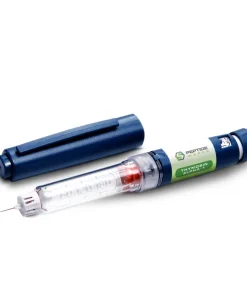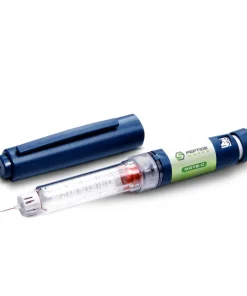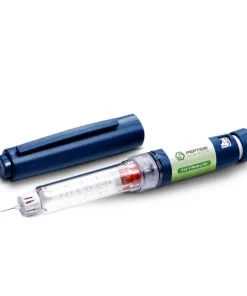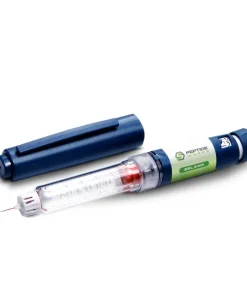

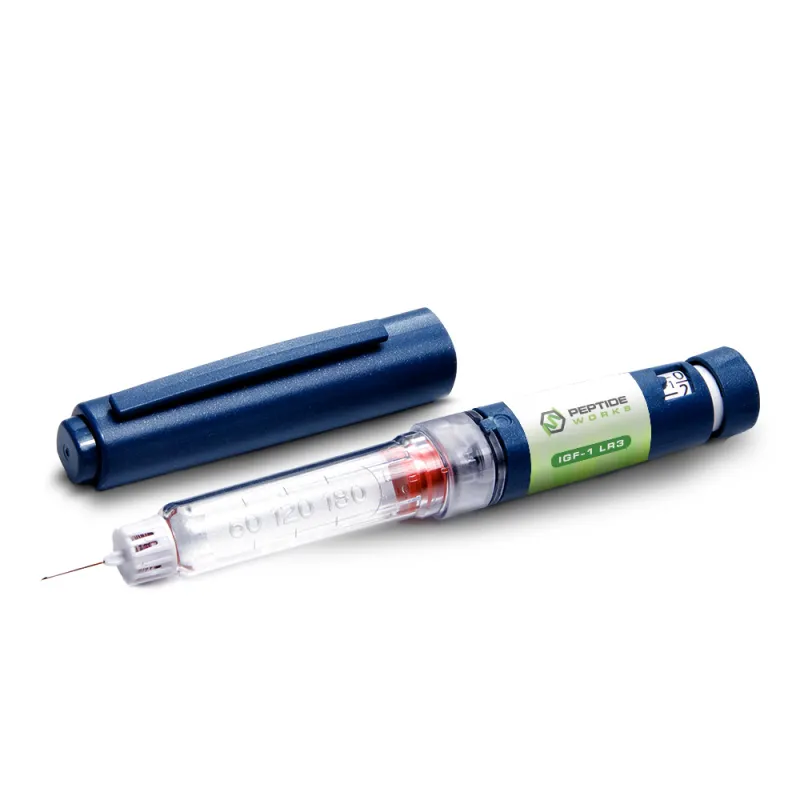
Buy IGF-1 LR3 Pre-Mixed Peptide In Europe
Need IGF-1 LR3 Pre-Mixed Peptide in Europe for your cell and muscle research? You’re in the right place.
At Peptide Shop Europe we deliver lab-grade IGF-1 LR3 in a ready-to-use solution. No reconstitution required.
Where to buy IGF-1 LR3 Pre-Mixed in the EU? From our EU warehouse with 48H delivery to UK, Germany, France and across Europe. Every batch is lab-tested and ships with full COA documentation.
Can I purchase IGF-1 LR3 Pre-Mixed online? Yes. You can order IGF-1 LR3 Pre-Mixed Peptide, shop IGF-1 LR3 research peptide, or get ready-to-use IGF-1 LR3 from EU stock today.
Researchers across Europe trust Peptideshopeurope.com to purchase high-purity IGF-1 LR3 Pre-Mixed for growth factor and cellular studies. Fast dispatch, discreet packaging, and verified purity so you can stock your lab with IGF-1 LR3 Pre-Mixed Peptide in Europe.
IGF-1 LR3 Pre-Mixed Peptide: Overview
IGF-1 LR3 Pre-Mixed Peptide is a prepared formulation associated with Long R3 Insulin-like Growth Factor-1 (Long R3 IGF-1), a modified analogue of insulin-like growth factor-1 (IGF-1).
IGF-1 LR3 is structurally different from native human IGF-1. It contains an additional N-terminal sequence and an arginine substitution at position 3, modifications designed to reduce binding to IGF-binding proteins and alter its biological activity. Research has consequently investigated the compound as an experimental IGF-1 analogue.
Importantly, IGF-1 LR3 is not an FDA-approved human medicine. It should not be confused with mecasermin, the recombinant native IGF-1 product approved in the United States for specific pediatric growth disorders.
What Is IGF-1 LR3 Pre-Mixed Peptide?
IGF-1 LR3 Pre-Mixed Peptide refers to a prepared formulation associated with Long R3 IGF-1 rather than an unprepared research material.
Native IGF-1 is a naturally occurring hormone involved in growth, cellular signaling, metabolism, and tissue development. IGF-1 LR3 was designed as a modified analogue with altered interactions with IGF-binding proteins.
The term pre-mixed describes the physical presentation of a particular product. It does not establish its concentration, purity, sterility, stability, or regulatory status.
IGF-1 LR3 Pre-Mixed Peptide: How It Works
IGF-1 LR3 is an analogue of insulin-like growth factor-1 and acts through the IGF-1 receptor (IGF-1R) and related signaling pathways.
A simplified pathway is:
IGF-1 LR3 → IGF-1 receptor signaling → intracellular growth and survival pathways
Native IGF-1 is normally regulated extensively through binding proteins. The structural modifications in Long R3 IGF-1 reduce its affinity for several IGF-binding proteins, which is one reason researchers have investigated its altered pharmacological characteristics. (PubMed)
IGF-1 LR3 Pre-Mixed Peptide and Scientific Research
Research involving Long R3 IGF-1 has primarily been conducted in laboratory and animal models.
Experimental studies have examined its effects on:
- Cellular growth signaling
- Protein metabolism
- Tissue development
- Organ growth
- Muscle-related physiology
- IGF-1 receptor pathways
- Experimental aging research
For example, an animal study involving guinea pigs found that Long R3 IGF-1 affected several tissue and circulating growth-factor parameters, although the treatment did not produce generalized body-weight growth.
These findings illustrate why experimental IGF-1 analogues require careful interpretation: biological activity in an animal model does not establish a corresponding human therapeutic benefit.
Research Areas
IGF-1 Receptor Signaling
IGF-1 LR3 is useful for experimental investigation of signaling pathways activated by IGF-1 receptor stimulation.
Protein and Tissue Research
Animal studies have examined Long R3 IGF-1 in relation to protein metabolism and tissue responses.
Growth-Factor Research
Because IGF-1 is an important component of the GH/IGF-1 axis, Long R3 IGF-1 can be investigated alongside other growth-factor pathways.
Aging and Neuroscience Research
Recent animal research has investigated intranasal Long R3 IGF-1 in a mouse model of Alzheimer’s disease. The study reported changes in certain amyloid-plaque characteristics but did not demonstrate preservation of cognitive function. The authors concluded that further investigation was necessary.
IGF-1 LR3 and the GH/IGF-1 Axis
IGF-1 is an important downstream component of growth hormone signaling.
A simplified endocrine pathway is:
Growth hormone → GH receptor → IGF-1 production and signaling → downstream cellular effects
Unlike GHRP-2 or ipamorelin, which are growth hormone secretagogues, IGF-1 LR3 is an IGF-1 analogue itself.
This distinction is important when comparing different research peptides because they act at different points within the endocrine pathway.
Evidence and Limitations
The evidence surrounding IGF-1 LR3 is considerably more limited than that surrounding native IGF-1.
Published research includes animal and laboratory studies, while evidence for established human therapeutic use is lacking. A recent PubMed-indexed analysis also describes Long R3 IGF-1 as a substance that has never been approved for human use and documents its detection in anti-doping research.
Important limitations include:
- Human clinical evidence is very limited.
- Long-term human safety has not been established.
- Animal findings cannot automatically be extrapolated to humans.
- A research formulation may differ substantially from material used in published studies.
- Product purity and concentration require independent verification.
- Increased growth-factor signaling does not automatically translate into a clinical benefit.
Regulatory Status
IGF-1 LR3 should be clearly distinguished from native recombinant IGF-1 (mecasermin).
Mecasermin is an approved pharmaceutical product for specific pediatric indications involving severe primary IGF-1 deficiency. IGF-1 LR3 is a structurally modified analogue and is not equivalent to mecasermin.
Published anti-doping research also identifies Long R3 IGF-1 and related IGF-1 analogues as prohibited substances in sport. (PubMed)
Product Quality and Documentation
For a pre-mixed research formulation, product-specific documentation can help establish the characteristics of a particular preparation.
Useful documentation may include:
- IGF-1 LR3 identity
- Concentration
- Purity analysis
- Batch or lot number
- Manufacturing information
- Formulation components
- Stability information
- Storage conditions
- Expiration or retest date
- Certificate of analysis, where available
A certificate of analysis can provide batch-specific analytical information but does not establish clinical efficacy or regulatory approval.
Safety and Important Considerations
IGF-1 signaling influences cell growth, survival, metabolism, and tissue physiology. Consequently, manipulating this pathway is biologically significant.
The absence of adequate human safety data means that potential long-term effects cannot be confidently characterized.
Claims that IGF-1 LR3 is a proven treatment for muscle growth, fat loss, anti-aging, recovery, or longevity go beyond the established clinical evidence.
The compound should therefore be described as an experimental research analogue, rather than an established therapeutic treatment.
Storage and Handling
Storage requirements depend on the specific preparation and manufacturer’s documentation.
General considerations include:
- Follow the labeled storage conditions.
- Keep the preparation in its original container.
- Protect it from inappropriate temperature, moisture, and light.
- Observe the expiration or retest date.
- Do not use visibly compromised packaging.
- Follow product-specific stability information.
Frequently Asked Questions About IGF-1 LR3 Pre-Mixed Peptide
What is IGF-1 LR3 Pre-Mixed Peptide?
IGF-1 LR3 Pre-Mixed Peptide is a prepared formulation associated with Long R3 IGF-1, a modified analogue of insulin-like growth factor-1 investigated primarily in experimental research.
What does LR3 mean?
“LR3” refers to Long R3, describing structural modifications that include an N-terminal extension and an arginine substitution at position 3.
Is IGF-1 LR3 the same as IGF-1?
No. IGF-1 LR3 is a modified analogue of native IGF-1. Its structural modifications alter its interaction with IGF-binding proteins and its pharmacological properties.
Is IGF-1 LR3 the same as mecasermin?
No. Mecasermin is recombinant native human IGF-1, whereas IGF-1 LR3 is a modified analogue. They should not be considered interchangeable.
Has IGF-1 LR3 been studied in humans?
Published evidence for human therapeutic research is extremely limited. Much of the available literature concerns laboratory and animal models, while anti-doping research has focused on analytical detection of the analogue.
Is IGF-1 LR3 Pre-Mixed Peptide an approved medicine?
No. IGF-1 LR3 is not an FDA-approved human medicine. Its experimental status should be distinguished from the regulatory status of native recombinant IGF-1 products.
Scientific References and Informative Sources
- PubMed — Detection of Long R3-IGF-I and Related Analogues (PubMed)
- PubMed — Long R3 IGF-I and Organ Growth Research (PubMed)
- PubMed — Intranasal Long R3 IGF-1 in an Alzheimer’s Disease Mouse Model (PubMed)
- PubMed — Long R3 IGF-1 and Protein Metabolism (PubMed)
- FDA — Information on Unapproved IGF-1-Related Products (U.S. Food and Drug Administration)
Summary
IGF-1 LR3 Pre-Mixed Peptide is a prepared formulation associated with Long R3 IGF-1, a modified analogue of insulin-like growth factor-1 designed to alter its interaction with IGF-binding proteins.
Experimental research has investigated the compound in relation to growth-factor signaling, protein metabolism, tissue biology, and neurological models. However, the evidence remains predominantly preclinical, and IGF-1 LR3 has not been established as an approved human therapeutic.
It is also important to distinguish IGF-1 LR3 from approved native IGF-1 products such as mecasermin. The scientific and regulatory evidence should therefore be considered separately from claims made about individual commercial peptide preparations.
ALL CONTENT AND PRODUCT INFORMATION AVAILABLE ON THIS WEBSITE IS FOR EDUCATIONAL PURPOSES ONLY.
DISCLAIMER: Products are supplied for research purposes only and are not intended to diagnose, treat, cure, or prevent any disease.