
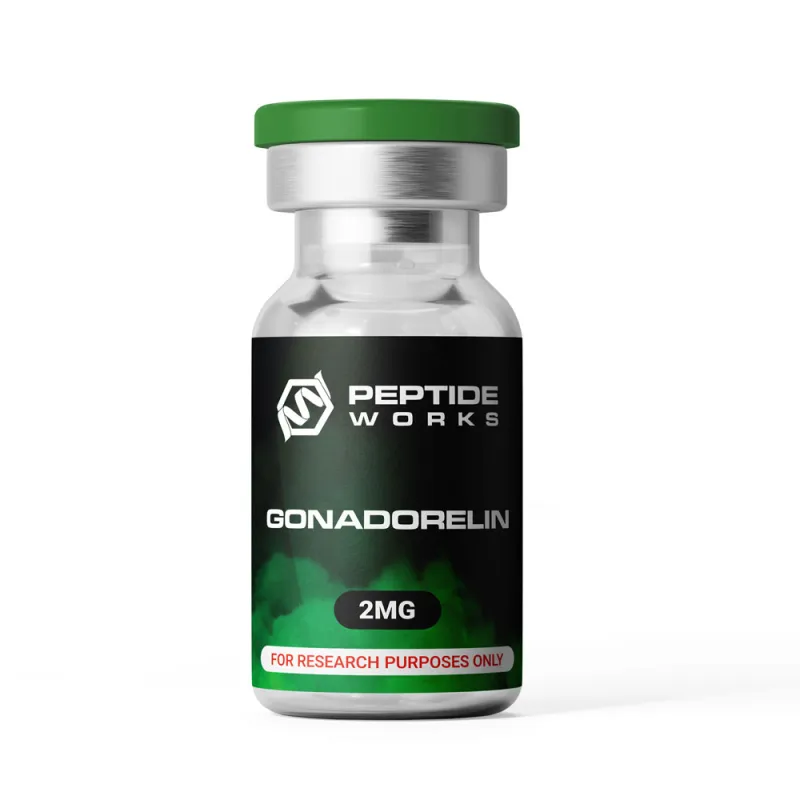
Buy Gonadorelin Peptide Vial In Europe
Grab Gonadorelin Peptide Vial in Europe from a trusted source.
At Peptide Shop Europe (Peptideshopeurope.com) we supply high-purity lyophilized Gonadorelin with full lab documentation.
Where to buy Gonadorelin Peptide Vial in the EU? Right here. We ship from our EU warehouse with 48H delivery to UK, Germany, France and across Europe.
Can I purchase Gonadorelin Vial online? Yes. You can order Gonadorelin Peptide Vial, shop GnRH research peptide, or get Gonadorelin vial from EU stock with COA included.
Researchers across Europe rely on Peptideshopeurope.com to purchase pharmaceutical-grade Gonadorelin Peptide for laboratory studies. Verified purity, discreet packaging, and fast dispatch so you can stock your lab with Gonadorelin Peptide Vial in Europe.
Gonadorelin Peptide Vial: Overview
Gonadorelin Peptide Vial is a vial-form preparation associated with gonadorelin, the synthetic form of gonadotropin-releasing hormone (GnRH). GnRH is a naturally occurring hypothalamic hormone responsible for regulating pituitary secretion of luteinizing hormone (LH) and follicle-stimulating hormone (FSH).
Gonadorelin has an established role in reproductive endocrinology and has been investigated in diagnostic, physiological, and therapeutic settings. The properties and regulatory status of a particular vial preparation, however, depend on its formulation, manufacturer, intended use, and jurisdiction.
What Is Gonadorelin Peptide Vial?
Gonadorelin Peptide Vial refers to a vial-form preparation containing or associated with gonadorelin.
Gonadorelin acts on GnRH receptors in the pituitary gland. Under normal physiology, GnRH is released in pulses, stimulating the pituitary to produce LH and FSH. These hormones subsequently influence reproductive function and gonadal hormone production.
The term peptide vial describes the product presentation and does not by itself establish concentration, purity, sterility, stability, or regulatory approval.
Gonadorelin Peptide Vial: How It Works
The biological pathway involving gonadorelin can be summarized as:
Gonadorelin → GnRH receptor activation → LH and FSH release → Gonadal signaling
LH and FSH have different but complementary roles in reproductive physiology. Their downstream effects vary according to sex, age, reproductive status, and underlying endocrine function.
An important feature of GnRH physiology is that the pattern of exposure matters. Pulsatile GnRH signaling promotes gonadotropin secretion, while continuous exposure can eventually suppress pituitary responsiveness.
Gonadorelin Peptide Vial and Reproductive Endocrinology
Gonadorelin is particularly relevant to reproductive-endocrine research because GnRH occupies a central position within the hypothalamic-pituitary-gonadal axis.
Research has examined gonadorelin in relation to:
- LH secretion
- FSH secretion
- Pituitary responsiveness
- Ovarian function
- Testicular function
- Sex-hormone production
- Pubertal development
- Fertility physiology
Because gonadorelin acts upstream of LH and FSH, researchers can use GnRH-related stimulation to investigate several components of reproductive endocrine function.
Potential Research Areas
Pituitary Function
Gonadorelin can be used in research and clinical evaluation of pituitary responsiveness to GnRH stimulation.
LH and FSH Regulation
Studies involving gonadorelin have helped researchers understand how pulsatile GnRH signaling controls LH and FSH secretion.
Fertility Research
GnRH signaling is fundamental to ovulation, reproductive hormone regulation, and spermatogenesis, making gonadorelin relevant to fertility research.
Reproductive Hormone Research
By influencing LH and FSH secretion, gonadorelin can indirectly affect downstream gonadal hormone production.
Gonadorelin Peptide Vial and Hormonal Signaling
The reproductive endocrine pathway can be represented as:
Hypothalamus → GnRH → Pituitary → LH/FSH → Gonads
This pathway demonstrates why gonadorelin is not itself a sex hormone. Instead, it regulates the release of hormones that subsequently influence reproductive tissues.
The response to GnRH stimulation is also dependent on the frequency and duration of exposure. This is an important consideration when interpreting research involving gonadorelin.
Clinical and Diagnostic Research
Gonadorelin has been investigated and used in medical settings to evaluate aspects of the hypothalamic-pituitary-gonadal axis.
Diagnostic research can examine whether the pituitary responds appropriately to GnRH stimulation by measuring changes in LH and FSH.
Gonadorelin has also been investigated in reproductive medicine and endocrine disorders involving abnormal GnRH signaling.
Clinical use requires an appropriate medical indication and professional assessment rather than reliance on the product name alone.
Evidence and Limitations
Gonadorelin has a well-established physiological basis compared with many newer experimental peptides.
Nevertheless, several distinctions remain important:
- Evidence for gonadorelin does not automatically validate every vial preparation.
- Formulation and route can influence exposure.
- Endocrine responses vary according to individual physiology.
- Pulsatile and continuous exposure can produce different effects.
- Product-specific quality and sterility require independent verification.
Therefore, established knowledge about GnRH physiology should not be confused with evidence supporting an individual commercial peptide preparation.
Product Quality and Documentation
For a vial-form preparation, product documentation can help establish the characteristics of a particular batch.
Relevant information may include:
- Gonadorelin identity
- Concentration
- Purity analysis
- Batch or lot number
- Manufacturing information
- Formulation components
- Storage requirements
- Expiration or retest date
- Certificate of analysis, where available
A certificate of analysis can provide batch-specific information but does not independently establish clinical efficacy or regulatory approval.
Safety and Important Considerations
Gonadorelin directly influences reproductive endocrine signaling.
Potential physiological effects depend on:
- Age
- Sex
- Existing endocrine function
- Exposure pattern
- Route of administration
- Underlying reproductive condition
- Formulation characteristics
Because GnRH stimulation affects LH and FSH, inappropriate exposure could alter reproductive hormone regulation.
Gonadorelin should therefore be considered within an appropriate medical or research context rather than as a general-purpose supplement.
Storage and Handling
Storage requirements depend on the particular formulation and manufacturer’s instructions.
General considerations include:
- Follow the labeled storage conditions.
- Keep the vial in its original packaging.
- Protect the preparation from inappropriate temperature, moisture, and light.
- Observe the expiration or retest date.
- Do not use visibly compromised packaging.
- Follow product-specific stability instructions.
Frequently Asked Questions About Gonadorelin Peptide Vial
What is Gonadorelin Peptide Vial?
Gonadorelin Peptide Vial is a vial-form preparation associated with gonadorelin, the synthetic form of gonadotropin-releasing hormone.
What does gonadorelin do?
Gonadorelin activates GnRH receptors in the pituitary gland and can stimulate the release of LH and FSH.
Is gonadorelin the same as GnRH?
Gonadorelin is the synthetic form of naturally occurring GnRH used in medical and research contexts.
What is gonadorelin researched for?
Gonadorelin has been studied in pituitary function, LH and FSH regulation, reproductive endocrinology, fertility physiology, and disorders involving the hypothalamic-pituitary-gonadal axis.
Can gonadorelin affect testosterone or estrogen?
Indirectly, yes. By influencing LH and FSH secretion, gonadorelin can affect downstream gonadal hormone production. The specific response depends on the individual’s endocrine status and exposure pattern.
Is Gonadorelin Peptide Vial an approved medicine?
Gonadorelin has an established medical history in certain clinical applications and jurisdictions. However, the regulatory status of a specific vial preparation depends on its formulation, manufacturer, intended use, and jurisdiction.
Scientific References and Informative Sources
- NCBI Bookshelf — Physiology, Gonadotropin-Releasing Hormone
- PubMed — Gonadotropin-Releasing Hormone Physiology
- FDA — Gonadorelin Label Information
- Merck Manual — Female Reproductive Endocrinology
- NCBI Bookshelf — Gonadotropin-Releasing Hormone and Reproductive Function
Summary
Gonadorelin Peptide Vial is a vial-form preparation associated with gonadorelin, a synthetic GnRH peptide involved in regulating pituitary secretion of LH and FSH.
Its established physiological role makes it particularly relevant to reproductive-endocrine, pituitary, and fertility research. However, the characteristics and regulatory status of an individual vial preparation should always be evaluated separately from the established biology of gonadorelin.
ALL CONTENT AND PRODUCT INFORMATION AVAILABLE ON THIS WEBSITE IS FOR EDUCATIONAL PURPOSES ONLY.
DISCLAIMER: Products are supplied for research purposes only and are not intended to diagnose, treat, cure, or prevent any disease.