
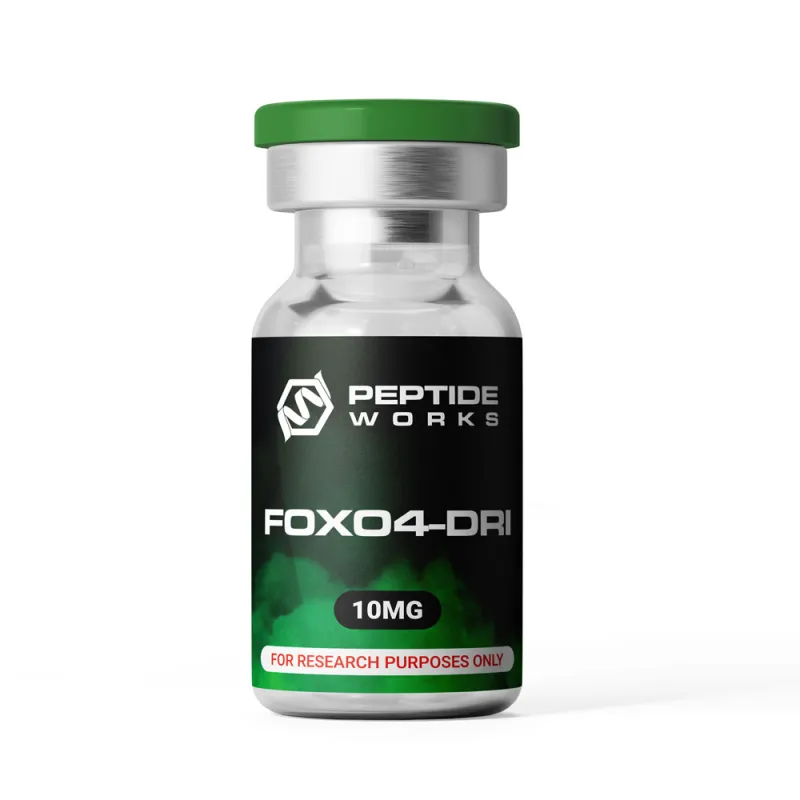
Buy FOXO4-DRI Peptide Vial In Europe
Looking to buy FOXO4-DRI Peptide Vial in Europe online? Look no further than Peptide Shop Europe (Peptideshopeurope.com).
We supply top quality FOXO4-DRI Peptide Vial in Europe for research and laboratory use. Each FOXO4-DRI lyophilized vial comes lab-tested with full COA documentation and cold-chain shipping options.
Researchers across the EU order FOXO4-DRI Peptide Vial from Germany, France, UK and beyond with 48H dispatch from our EU warehouse. Whether you want to purchase FOXO4-DRI peptide Europe, shop FOXO4-DRI vial UK, get FOXO4-DRI research peptide Germany, or find senolytic research peptide, we’ve got you covered.
Peptideshopeurope.com is your trusted source to stock up on FOXO4-DRI Peptide Vial in Europe. Get reliable, high-purity FOXO4-DRI for cellular and aging research — in stock now for fast EU delivery.
FOXO4-DRI Peptide Vial: Overview
FOXO4-DRI Peptide Vial is a research-oriented preparation associated with FOXO4-DRI, a synthetic D-retro-inverso peptide designed to interfere with the interaction between the FOXO4 protein and p53.
FOXO4-DRI has attracted scientific interest primarily in cellular senescence and senolytic research. Experimental studies have investigated whether disrupting the FOXO4-p53 interaction can promote selective apoptosis of senescent cells while leaving non-senescent cells relatively less affected.
The available evidence remains predominantly preclinical, involving cultured cells and animal models rather than established human clinical treatment.
| Feature | Information |
|---|---|
| Product | FOXO4-DRI Peptide Vial |
| Active research compound | FOXO4-DRI |
| Peptide type | D-retro-inverso peptide |
| Research category | Senolytic and cellular-aging research |
| Primary molecular target | FOXO4-p53 interaction |
| Main research models | Cell cultures and animal models |
| Clinical evidence | No established human therapeutic evidence |
What Is FOXO4-DRI Peptide Vial?
FOXO4-DRI Peptide Vial refers to a vial-form preparation associated with FOXO4-DRI for research applications.
FOXO4-DRI was developed to mimic an important region of FOXO4 while incorporating a retro-inverso configuration intended to improve peptide stability. Its research purpose is to interfere with the interaction between FOXO4 and p53.
In senescent cells, the FOXO4-p53 interaction has been investigated as a mechanism that can contribute to resistance to apoptosis. Disrupting this interaction may release p53 activity and promote programmed cell death in targeted experimental models.
FOXO4-DRI Peptide Vial: Scientific Background
Cellular senescence describes a state in which cells permanently or persistently stop dividing while remaining metabolically active. Senescent cells can release signaling molecules collectively referred to as the senescence-associated secretory phenotype (SASP).
Researchers have therefore investigated senolytic approaches designed to selectively eliminate senescent cells.
FOXO4-DRI is one such experimental approach. Its molecular design focuses on the FOXO4-p53 interaction rather than directly targeting a general marker of cellular aging.
FOXO4-DRI Peptide Vial and Senolytic Research
Senolytic research focuses on compounds capable of selectively eliminating senescent cells.
Experimental work with FOXO4-DRI has investigated whether disrupting FOXO4-p53 signaling can cause apoptosis in senescent cells. Studies have reported selective effects in several experimental models, including cultured cells and aged animals.
A 2021 study involving human chondrocytes found that FOXO4-DRI could reduce senescent cells in expanded cell cultures. However, the researchers noted that its usefulness for improving cartilage formation required further investigation. (PubMed)
More recent research has investigated FOXO4-DRI in endothelial-cell senescence and animal models of vascular aging, further expanding the preclinical research surrounding the peptide. (PubMed)
Potential Research Areas
Cellular Senescence
FOXO4-DRI is primarily investigated as a tool for studying the biology of senescent cells and mechanisms responsible for their persistence.
Senolytic Research
The peptide has been investigated as a potential senolytic because of its ability to interfere with FOXO4-p53 signaling in experimental models.
Tissue-Aging Research
Animal and cellular studies have explored whether reducing senescent-cell accumulation can influence tissue function associated with aging.
Vascular Research
Recent experimental work has examined FOXO4-DRI in relation to endothelial-cell senescence and vascular aging. The results remain preclinical and should not be interpreted as evidence of an established treatment for vascular disease. (PubMed)
Cartilage Research
Researchers have also investigated FOXO4-DRI in expanded human chondrocytes. These studies provide useful information about cellular senescence but do not establish clinical effectiveness for cartilage disorders. (PubMed)
FOXO4-DRI Peptide Vial and the FOXO4-p53 Pathway
The FOXO4-p53 pathway is central to the proposed mechanism of this peptide.
FOXO4 can interact with p53, a protein involved in cellular stress responses, cell-cycle regulation, and apoptosis. Researchers hypothesize that disrupting this interaction may allow p53-dependent apoptotic signaling to become more active in senescent cells.
This mechanism is scientifically interesting because senescent cells can resist normal programmed-cell-death pathways.
However, biological pathways are complex, and selectively eliminating senescent cells may have different consequences depending on the tissue, age, disease state, and cellular environment.
Research Evidence and Limitations
The evidence for FOXO4-DRI remains primarily preclinical.
Research has demonstrated activity in:
- Cultured human cells
- Animal models
- Senescent fibroblast models
- Chondrocyte models
- Endothelial-cell models
- Experimental tissue-aging models
A 2026 review describes FOXO4-DRI as a promising experimental senolytic strategy while emphasizing its role in preclinical research. (PubMed)
Importantly, laboratory and animal findings do not establish that the peptide can extend human lifespan, reverse aging, prevent disease, or safely eliminate senescent cells in people.
Product Quality and Documentation
When evaluating a research peptide vial, product-specific documentation is important.
Relevant documentation may include:
- Peptide identity
- Purity analysis
- Quantity
- Batch or lot number
- Manufacturing information
- Certificate of analysis
- Storage conditions
- Expiration or retest information
A certificate of analysis can provide information about a particular batch but does not establish clinical effectiveness, regulatory approval, or suitability for human use.
Safety and Important Considerations
FOXO4-DRI Peptide Vial should be distinguished from an approved therapeutic medicine.
The peptide’s senolytic mechanism involves promoting apoptosis in targeted experimental cells. Because apoptosis is a fundamental biological process, unintended effects on healthy cells or tissues remain an important consideration for future research.
Key limitations include:
- Human safety has not been adequately established.
- Human therapeutic efficacy has not been demonstrated.
- There is no established clinical dosing regimen.
- Long-term effects remain uncertain.
- Experimental results cannot automatically be translated into human anti-aging benefits.
- The quality and composition of research-vial products can vary between suppliers.
For these reasons, claims describing FOXO4-DRI as a proven anti-aging or longevity treatment would go beyond the current evidence.
Storage and Handling
Storage requirements depend on the particular research preparation and manufacturer.
General considerations include:
- Follow the manufacturer’s labeled storage requirements.
- Keep the vial in its original packaging.
- Protect the material from inappropriate temperature, moisture, and light.
- Observe the stated expiration or retest date.
- Do not use visibly compromised packaging.
- Consult batch-specific stability documentation when available.
Frequently Asked Questions About FOXO4-DRI Peptide Vial
What is FOXO4-DRI Peptide Vial?
FOXO4-DRI Peptide Vial is a research-oriented vial preparation associated with FOXO4-DRI, an experimental peptide investigated for its ability to interfere with the FOXO4-p53 interaction.
What does FOXO4-DRI mean?
FOXO4-DRI refers to a D-retro-inverso form of a FOXO4-derived peptide designed to interact with the FOXO4-p53 pathway.
What is FOXO4-DRI researched for?
Research primarily focuses on cellular senescence, senolytic mechanisms, tissue aging, and the molecular pathways involved in the survival of senescent cells.
Is FOXO4-DRI an anti-aging treatment?
No established human evidence demonstrates that FOXO4-DRI is an anti-aging treatment. Its potential role in aging research remains experimental and predominantly preclinical.
Has FOXO4-DRI been studied in human cells?
Yes. Researchers have studied FOXO4-DRI in cultured human cells, including human chondrocytes. However, cell-culture research is not equivalent to administering the peptide to humans. (PubMed)
Is FOXO4-DRI Peptide Vial an approved medicine?
FOXO4-DRI should be regarded as an experimental research compound rather than an established approved medicine. Current published evidence does not establish a validated human therapeutic use.
Scientific References and Informative Sources
- PubMed — FOXO4-DRI and Senescent Human Chondrocytes
- PubMed — FOXO4-DRI and Endothelial Cell Senescence
- PubMed — FOXO4-DRI and Brain-Aging Research
- PubMed — FOXO4-DRI and Keloid Fibroblast Senescence
- PubMed — Molecular Design of FOXO4-Targeting Senolytic Peptides
Summary
FOXO4-DRI Peptide Vial is a research preparation associated with an experimental senolytic peptide designed to interfere with the FOXO4-p53 interaction.
Research in cultured cells and animal models suggests that FOXO4-DRI can influence pathways involved in senescent-cell survival and apoptosis. More recent studies continue to investigate its potential relevance to vascular, cartilage, and brain-aging research.
However, the evidence remains preclinical, and there is not sufficient human evidence to establish FOXO4-DRI as a safe or effective anti-aging, longevity, or disease-treatment product.
ALL CONTENT AND PRODUCT INFORMATION AVAILABLE ON THIS WEBSITE IS FOR EDUCATIONAL PURPOSES ONLY.
DISCLAIMER: Products are supplied for research purposes only and are not intended to diagnose, treat, cure, or prevent any disease.