
Buy Follistatin 344 Nasal Spray In Europe
Researching myostatin pathways? Get Follistatin 344 Nasal Spray in Europe ready to use.
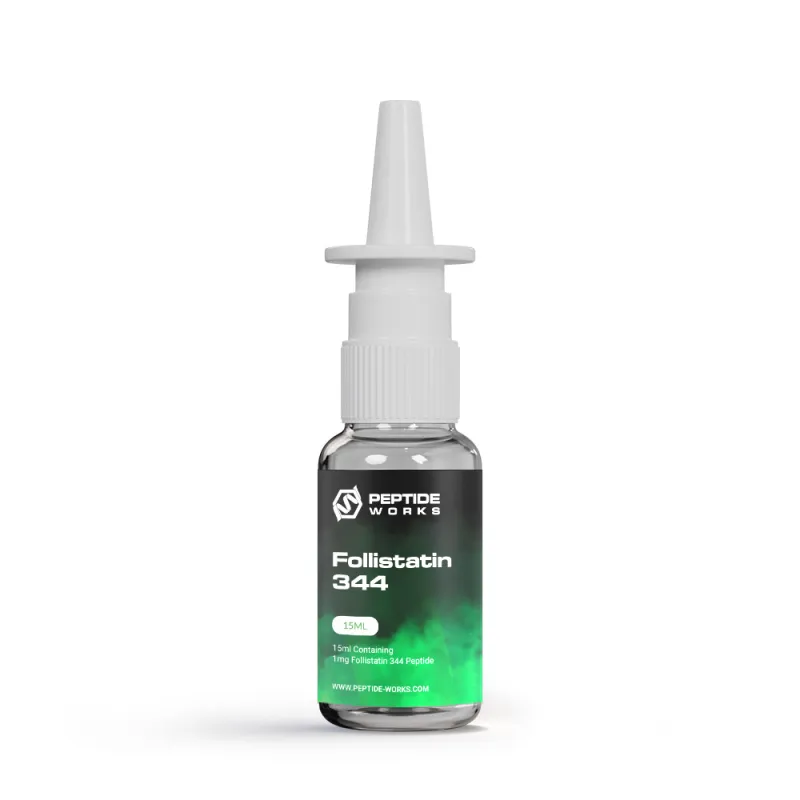
At Peptide Shop Europe we supply lab-grade Follistatin 344 in a sterile nasal spray solution. No reconstitution needed, every bottle ships with full COA.
Where to buy Follistatin 344 Nasal Spray in the EU? From our EU warehouse with 48H delivery to UK, Germany, France and across Europe.
Can I purchase Follistatin 344 Nasal Spray online? Yes. You can order Follistatin 344 Nasal Spray, shop Follistatin 344 research peptide, or get Follistatin 344 nasal solution from EU stock today.
Labs across Europe trust Peptideshopeurope.com to purchase high-purity Follistatin 344 Nasal for muscle growth and regenerative studies. Verified purity, discreet shipping, and fast dispatch so you can stock your lab with Follistatin 344 Nasal Spray in Europe.
Follistatin 344 Nasal Spray: Overview
Follistatin 344 Nasal Spray refers to an experimental nasal-delivery formulation associated with follistatin-344 (FS344), a precursor form of follistatin involved in the regulation of activin, myostatin, and other members of the transforming growth factor-beta (TGF-β) superfamily.
Follistatin is particularly well known for its ability to bind and regulate activin and for interacting with myostatin (GDF-8). These properties have made the follistatin pathway an important subject of research involving skeletal-muscle biology, reproductive endocrinology, tissue development, and cellular signaling.
The term nasal spray describes the intended delivery route. It does not establish that a particular formulation has adequate nasal bioavailability, clinical effectiveness, pharmaceutical quality, or regulatory approval.
What Is Follistatin 344 Nasal Spray?
Follistatin 344 Nasal Spray describes a preparation intended to deliver the FS344 form of follistatin through the nasal route.
Follistatin exists in several molecular forms. Follistatin-344 is generally described as a precursor protein that can undergo processing to generate mature follistatin isoforms.
Unlike small-molecule drugs, follistatin is a relatively large protein, making formulation and delivery important considerations when evaluating a nasal preparation.
Follistatin 344 Nasal Spray: Biological Function
Follistatin primarily acts as a binding protein rather than as a conventional receptor agonist.
A simplified mechanism is:
Follistatin → binding to signaling ligands → reduced ligand availability → altered downstream signaling
Among its best-characterized interactions are those involving activins.
Follistatin can also bind myostatin and related TGF-β-family proteins. Through these interactions, it can influence signaling pathways associated with muscle development and other physiological processes.
Follistatin 344 Nasal Spray and Myostatin Research
Myostatin is a TGF-β-family signaling molecule that functions as an important negative regulator of skeletal-muscle growth.
Because follistatin can bind myostatin, researchers have investigated whether increasing follistatin activity can modify myostatin signaling.
Animal studies involving increased follistatin expression have demonstrated substantial effects on skeletal-muscle development. These findings have contributed to interest in follistatin-based approaches for studying muscle biology.
However, animal findings do not establish that a Follistatin 344 Nasal Spray produces comparable effects in humans.
Follistatin 344 Nasal Spray and Activin Signaling
Activins participate in numerous physiological processes, including:
- Reproductive function
- Pituitary signaling
- Cellular differentiation
- Tissue development
- Metabolic regulation
- Inflammatory processes
Follistatin regulates activin availability by binding the ligand and reducing its interaction with cell-surface receptors.
This broad biological activity is one reason why manipulating follistatin signaling can have effects extending beyond skeletal muscle.
Nasal Delivery of Follistatin
Nasal delivery has been explored as a potential route for administering biologically active peptides and proteins.
The nasal mucosa can provide an alternative absorption surface, but larger proteins present significant formulation challenges.
Important variables include:
- Molecular size
- Protein stability
- Enzymatic degradation
- Nasal mucosal clearance
- Formulation composition
- Delivery-device performance
- Concentration
- Local tolerability
Evidence that a particular peptide can be delivered intranasally does not automatically demonstrate that another large protein will achieve meaningful systemic or central exposure through the same route.
Follistatin 344 Nasal Spray: Research Applications
Muscle Biology
Follistatin is extensively studied for its interactions with myostatin and other regulators of skeletal-muscle development.
Myostatin Research
The follistatin–myostatin relationship provides a model for investigating mechanisms controlling muscle growth and differentiation.
Reproductive Endocrinology
Because follistatin regulates activin signaling, it is relevant to research involving reproductive hormones and gonadal physiology.
Developmental Biology
Activin and related TGF-β-family pathways play important roles in tissue development and cellular differentiation.
Protein Delivery Research
A nasal formulation also raises questions about whether large biologically active proteins can be delivered effectively through mucosal surfaces.
Evidence and Limitations
The biological effects of follistatin have been demonstrated in multiple experimental models, but the evidence specifically supporting Follistatin 344 Nasal Spray is much more limited.
Key limitations include:
- Limited human clinical evidence for intranasal FS344.
- Uncertainty regarding nasal bioavailability.
- Limited long-term safety information.
- Potential differences between FS344 and mature follistatin isoforms.
- Differences between experimental research material and commercial preparations.
- Lack of established therapeutic dosing for a nasal formulation.
Accordingly, claims that this product is clinically proven to increase muscle mass, improve athletic performance, reverse aging, or treat muscle-wasting disorders would go beyond the available evidence.
Follistatin 344 and Muscle-Growth Claims
Follistatin’s relationship with myostatin has generated considerable interest in muscle-growth research.
Experimental increases in follistatin expression have produced substantial muscle-related effects in animal models. However, these results should not be equated with predictable effects from a nasal peptide formulation in humans.
The route of administration is particularly important. A study involving gene expression, injected protein, or another experimental delivery system cannot automatically be used to establish the effectiveness of a nasal spray.
Product Quality and Documentation
For a nasal protein preparation, product-specific documentation is especially important.
Relevant information may include:
- Follistatin identity
- Molecular form
- Protein concentration
- Purity testing
- Batch or lot number
- Formulation components
- Manufacturing information
- Stability data
- Nasal-delivery specifications
- Storage requirements
- Expiration or retest date
- Certificate of analysis, where available
A certificate of analysis can provide batch-specific analytical information but does not independently establish clinical effectiveness or regulatory approval.
Safety and Important Considerations
Follistatin interacts with several biologically important signaling pathways. Altering these pathways may therefore have effects beyond the intended research objective.
Potential areas of uncertainty include:
- Effects on activin signaling
- Effects on myostatin signaling
- Reproductive endocrine effects
- Tissue-growth signaling
- Long-term exposure
- Nasal mucosal tolerability
- Systemic absorption
The safety profile of an experimental Follistatin 344 Nasal Spray cannot be inferred solely from studies involving naturally occurring follistatin or other routes of administration.
Regulatory Status
A product marketed as Follistatin 344 Nasal Spray should be distinguished from an approved pharmaceutical medicine.
Scientific evidence demonstrating biological activity does not constitute regulatory approval. The regulatory status of any specific product depends on its formulation, manufacturer, intended use, and jurisdiction.
Follistatin research should therefore be separated from claims concerning the regulatory status or clinical effectiveness of a particular commercial nasal preparation.
Frequently Asked Questions About Follistatin 344 Nasal Spray
What is Follistatin 344 Nasal Spray?
It is a nasal-delivery preparation associated with follistatin-344, an experimental protein involved in activin, myostatin, and TGF-β-family signaling.
What is follistatin 344?
Follistatin-344 is a precursor form of the follistatin protein. It can undergo processing to produce mature follistatin isoforms.
Does follistatin affect myostatin?
Yes. Follistatin can bind myostatin and reduce its availability for receptor-mediated signaling, which is why the pathway is extensively studied in muscle biology.
Is Follistatin 344 the same as myostatin?
No. Myostatin acts as a negative regulator of skeletal-muscle growth, whereas follistatin is a binding protein that can inhibit myostatin and activin signaling.
Has nasal Follistatin 344 been clinically proven?
There is insufficient clinical evidence to establish a specific Follistatin 344 Nasal Spray as a proven human treatment.
Is Follistatin 344 Nasal Spray an approved medicine?
A product marketed under this name should not automatically be considered an approved pharmaceutical product. Regulatory status must be established for the exact formulation and jurisdiction.
Scientific References and Informative Sources
- NCBI — Follistatin and Activin Biology
- PubMed — Follistatin and Myostatin Research
- PubMed — Follistatin and TGF-β Family Signaling
- FDA — Unapproved Drugs
Summary
Follistatin 344 Nasal Spray refers to an experimental nasal-delivery concept involving the FS344 form of follistatin.
Follistatin is biologically important because it regulates activin, myostatin, and related TGF-β-family signaling pathways. Its interaction with myostatin has made it particularly relevant to research into skeletal-muscle development, while its broader activity connects it to reproductive and developmental biology.
Although follistatin has produced notable findings in laboratory and animal research, evidence specifically supporting nasal Follistatin 344 in humans remains limited. The product should therefore be characterized as an experimental peptide/protein formulation rather than an established therapeutic.
ALL CONTENT AND PRODUCT INFORMATION AVAILABLE ON THIS WEBSITE IS FOR EDUCATIONAL PURPOSES ONLY.
DISCLAIMER: Products are supplied for research purposes only and are not intended to diagnose, treat, cure, or prevent any disease.